

Ghana: Come Home, Stay Awhile
There are places you visit, and there are places that seem to recognize you before you have even unpacked your suitcase.
Ghana can feel like the latter.
For Black women from the Caribbean, North America, Britain and elsewhere in the diaspora, Ghana offers something beyond the usual luxury escape: a chance to walk through history, hear African languages in the street, shop for fabrics and jewellery, eat food that feels both familiar and completely new—and perhaps begin asking the question, What would it mean to have a life here?
Ghana deliberately positioned itself as a destination for the African diaspora through the 2019 Year of Return, and that relationship continues today through the government’s diaspora programmes and investment initiatives.
Your Golden Ghana itinerary
DAY 1 — Accra: Start with the woman Ghana became.
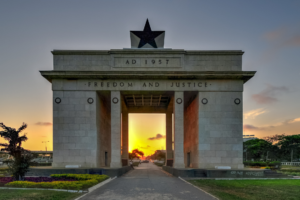
Give yourself a day to settle into Accra rather than rushing straight into a tour. Explore Kwame Nkrumah Memorial Park, Independence Square, the National Museum and the streets of Osu. Visit the W.E.B. Du Bois Memorial Centre for Pan-African Culture, then spend the afternoon shopping for Ghanaian textiles, jewellery, baskets and art. Accra has a wonderful mixture of polished restaurants, galleries, markets, beaches and creative spaces, making it particularly easy to enjoy as a stylish girls’ trip or solo escape.


DAY 2 — Accra: Beauty, art and the soft life.
Book a spa treatment, take a cooking class or market tour, visit an art gallery and have lunch somewhere beautiful. Then let the evening unfold. Ghana’s capital has a lively restaurant and creative scene, and you don’t have to be twenty-five to enjoy it. For the Her Golden Era woman, I’d choose a relaxed dinner, live music or an art event over attempting to visit every nightclub in Accra before midnight.
DAY 3 — Cape Coast: Follow the ancestral road.
This is the day that requires emotional preparation. Travel toward the Central Region and visit Assin Manso, an important site on the slave route, before continuing to Cape Coast Castle and, if time allows, Elmina Castle. These are not ordinary tourist attractions. Cape Coast Castle is a UNESCO World Heritage Site and its guided tour takes visitors through the castle, dungeons and museum. Assin Manso was a major slave-market gathering point before captives were taken toward the coast.
For descendants of enslaved Africans, this can be an extraordinarily powerful part of the journey—but give yourself time afterward. Don’t schedule a sunset cocktail immediately after walking out of the dungeons. Sit somewhere quiet. Walk along the beach. Talk. Journal. Breathe.
DAY 4 — Kakum: Forest, canopy and a little adventure.
Head into Kakum National Park, where the famous canopy walkway crosses the rainforest. It is about a four-hour drive from Accra, so this works best as part of a Cape Coast itinerary rather than a rushed day trip from the capital. Wear proper shoes, take water and let somebody else handle the driving.
DAY 5 — Kumasi: Meet the Ashanti story.
Travel inland to Kumasi, the historic heart of the Ashanti Kingdom. Visit Manhyia Palace, explore the craft markets and learn about kente weaving and Adinkra symbolism. If your trip coincides with an Akwasidae Festival, rearrange everything. The royal durbar, chiefs, gold ornaments, drums, umbrellas and extraordinary traditional dress make this one of the most memorable cultural experiences in Ghana.
DAY 6 — Ghanaian womanhood, creativity and commerce.
Spend a day meeting women entrepreneurs, designers, artists and business owners. Ghana has a particularly interesting ecosystem for women working in fashion, beauty, food, agriculture, creative industries and technology. Take a workshop—kente, Adinkra, batik, pottery or jewellery—or visit a Ghanaian-owned business and learn how it works. You are not simply buying a souvenir; you’re seeing African enterprise at work.
DAY 7 — The investor’s Ghana.
This is where your beach holiday becomes a business trip. Ghana hosts investment, trade and diaspora events throughout the year. The Ghana Investment Promotion Centre (GIPC) maintains a calendar of engagements that has included the Ghana CEO’s Summit, diaspora investment programmes, agribusiness missions, the African Business Investment Summit and Africa Oil Week. GIPC also says it is preparing the Ghana International Investment Summit (GIIS) for 2026.
What will you eat?
Come hungry.


Ghanaian food is hearty, aromatic and deeply regional.
Start with jollof rice, then try waakye, banku with grilled tilapia, fufu with light soup, red-red, kelewele, groundnut soup and plenty of grilled fish. Don’t leave without trying shito, Ghana’s fiery black pepper sauce, and don’t underestimate the pleasure of buying fresh fruit or roasted plantain from a roadside vendor.
For something more sophisticated, Accra has an increasingly polished restaurant scene, but some of the best food experiences are still the simplest ones: sitting down, being handed a steaming bowl of something you cannot pronounce and discovering that you absolutely love it.
Festivals worth planning around
Ghana’s calendar is one of the reasons I would encourage readers to choose the date before choosing the itinerary.
March is particularly attractive for culture: the 2026 calendar included the Akwaaba Festival, Asa Baako Festival, Akple Festival and Akwasidae Festival, alongside Ghana’s Independence celebrations on March 6.


The Odwira festivals take place annually around September and October, while the Central Region’s Fetu Afahye is held on the first Saturday of September. The Aboakyer Festival in Winneba takes place on the first Saturday of May.
And then there is December in Ghana—the season that transformed Ghana into one of Africa’s major diaspora destinations, with music, fashion, food, parties, art and cultural programming. If you want the glamorous, social Ghana experience, December is the obvious choice; if you want a quieter heritage journey, choose another month.
Our Ghana Calendar
- March 6 — Ghana Independence Day: parades, cultural performances and national celebrations.
- First Saturday in May — Aboakyer Festival, Winneba: a major traditional festival.
- August — Chale Wote Street Art Festival, Accra: art, performance, fashion, installations and street culture.
- October–November 2026 — Kente Wear Festival: four fashion shows, making this particularly attractive for a fashion-conscious traveller.
- December — “Detty December”: Ghana’s enormous end-of-year diaspora season of concerts, fashion, food, nightlife and cultural events.
- Akwasidae — Kumasi: a recurring Ashanti royal celebration with chiefs in magnificent regalia, gold ornaments, drumming and ceremony. The Ministry of Tourism says it occurs approximately every six weeks, so the exact date should be checked before travelling.
- GJTI Expo — November 28, 2026: the Ghana-Japan Trade & Investment Expo at the University of Ghana, specifically focused on Africa–Asia trade and investment.
Getting around
Accra is the easiest place to base yourself, but Ghana is not tiny. For a comfortable trip, pre-arrange a driver or use a reputable tour operator for longer excursions. Taxis and tro-tros are widely available, and intercity bus services connect the major towns, but travel times can be unpredictable. Visit Ghana specifically recommends pre-arranged transport for places such as Kakum.
For a seven-to-ten-day trip, I would not try to do Accra, Cape Coast, Kumasi and the Volta Region independently with a different taxi every morning. Hire a good driver for the longer journey days. Your knees—and your holiday—will thank you.

What does Ghana cost?
Ghana can be surprisingly flexible. In 2026, budget accommodation can start around US$50–80 a night, while a comfortable mid-range hotel in Accra is roughly US$85–180, and luxury hotels can run around US$350–400+ per night depending on the property and season.
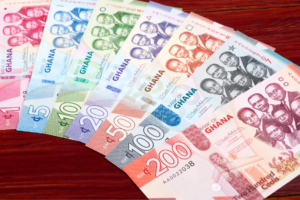

A comfortable traveller who wants good hotels, restaurants, private transportation and organised experiences should think in the region of US$200–350 per day, excluding international flights, while luxury travel can easily exceed that.
Ghana Beyond the History Books
Ghana has another side that deserves considerably more attention: fashion, gold, beauty, wellness and serious creative energy.
Accra’s fashion scene has become increasingly international, with Ghanaian designers reinterpreting kente, traditional weaving and African silhouettes for a contemporary woman; for a particularly timely visit, the 2026 Kente Wear Festival is scheduled across four dates—October 24, October 31, November 14 and November 21—combining fashion, music and Ghanaian textile culture.
The country’s new Black Star Experience initiative is also deliberately bringing together culture, fashion, music, film, food, art and business as part of Ghana’s ambition to become a global cultural and creative destination.


For the woman who loves jewellery, Ghana’s relationship with gold is impossible to ignore: the country remains one of Africa’s major gold producers, and its gold industry is now undergoing significant reforms aimed at increasing local value addition and refining rather than simply exporting raw material.
That makes a properly organised visit to Ghana’s jewellery and gold ecosystem fascinating for anyone interested in luxury, African craftsmanship or the business of precious metals—but remember that buying gold as an investment is very different from buying a beautiful piece of jewellery, and transactions should be made only through properly licensed, regulated channels.
And then there is the Ghana that social media keeps teasing us with: waterfalls, lush forests and wellness escapes.


A trip into the Volta Region can take you to Wli Falls, West Africa’s highest waterfall, surrounded by rainforest and dramatic mountain scenery.
Add a guided forest walk, a traditional village or cultural experience, and perhaps a wellness stay, and suddenly Ghana becomes something much more restorative than a city-and-history trip.
The official tourism platform specifically highlights waterfalls, mountains, ecotourism, wellness, crafts and resort experiences alongside heritage and festivals.
For the Her Golden Era woman, three days of Accra’s fashion, food and creative scene; two days confronting history along the Cape Coast; a few days of rainforest and waterfalls; and, if the calendar cooperates, an Akwasidae royal celebration, Kente fashion event or December cultural festival.
Ghana isn’t asking you to choose between the museum and the spa, the boardroom and the beach, or the kente runway and the investment conference. You can have all of it.
And then there is the question of coming home
Perhaps the most extraordinary part of the Ghana story is that people of African descent in the diaspora can apply for Right of Abode under Ghana’s Immigration Act.


This is not a tourism visa and it is not an automatic entitlement simply because someone has African ancestry.
The Ghana Immigration Service says the status may be granted to a person of African descent in the diaspora and, once granted, allows the holder to reside indefinitely, enter Ghana without a visa and work without a separate work permit.
Applicants must satisfy the relevant requirements and undergo approval and due diligence.
Ghana has also created a Historic Diaspora Community citizenship pathway, and in 2026 the government continued actively engaging people of African descent around citizenship and return. In March 2026, Ghana welcomed 150 members of the historic African diaspora as new citizens at a special ceremony.
For the woman whose family history disappeared into the records of the transatlantic slave trade, that is a very different proposition from buying a two-week holiday package.
It is the possibility of belonging.
Ghana for the investor
For a woman over 35 thinking beyond tourism, Ghana is worth investigating in sectors including agribusiness, manufacturing, tourism, logistics, technology, energy, healthcare and financial services. GIPC describes Ghana as a gateway to West Africa and specifically highlights its position as the headquarters of the African Continental Free Trade Area (AfCFTA).


Ghana is not without economic challenges, and nobody should arrive with rose-coloured glasses and a cheque.
But there are compelling reasons international investors continue to look toward the country: democratic continuity, a large and youthful consumer market, English as the official language, access to the AfCFTA market and a government investment agency specifically designed to help foreign investors establish and expand businesses.
Foreign investors should, however, understand Ghana’s rules before establishing a company.
GIPC currently lists minimum foreign-capital requirements of US$200,000 for qualifying joint ventures, US$500,000 for wholly foreign-owned companies and US$1 million for general trading companies, subject to exemptions and specific conditions.
Manufacturing, export trade and portfolio investments are among the areas identified for exemption from those minimums.
That makes Ghana particularly interesting, “Where can I build a serious African business?”
The Her Golden Era verdict
Ghana is not just a place to see Africa.
It is a place to ask questions about who you are, where your ancestors came from, what Africa looks like today—and what your relationship with the continent might become tomorrow.
You can stand at Cape Coast Castle and confront history.
Dance at a festival. Have your hair braided. Buy a piece of kente. Eat jollof until you need to loosen your khaki shors
Sit with a Ghanaian entrepreneur over coffee. Attend an investment forum. Visit a property development. Walk through an art gallery. And somewhere between Accra’s creative energy and the quiet of the Cape Coast shoreline, you may find yourself thinking:
Maybe coming home doesn’t have to mean moving back tomorrow. Maybe it begins with simply coming.