

Africa’s Beauty Pantry
Shea butter, cocoa, sea moss and the overlooked ingredients that could change the way Black women think about beauty.
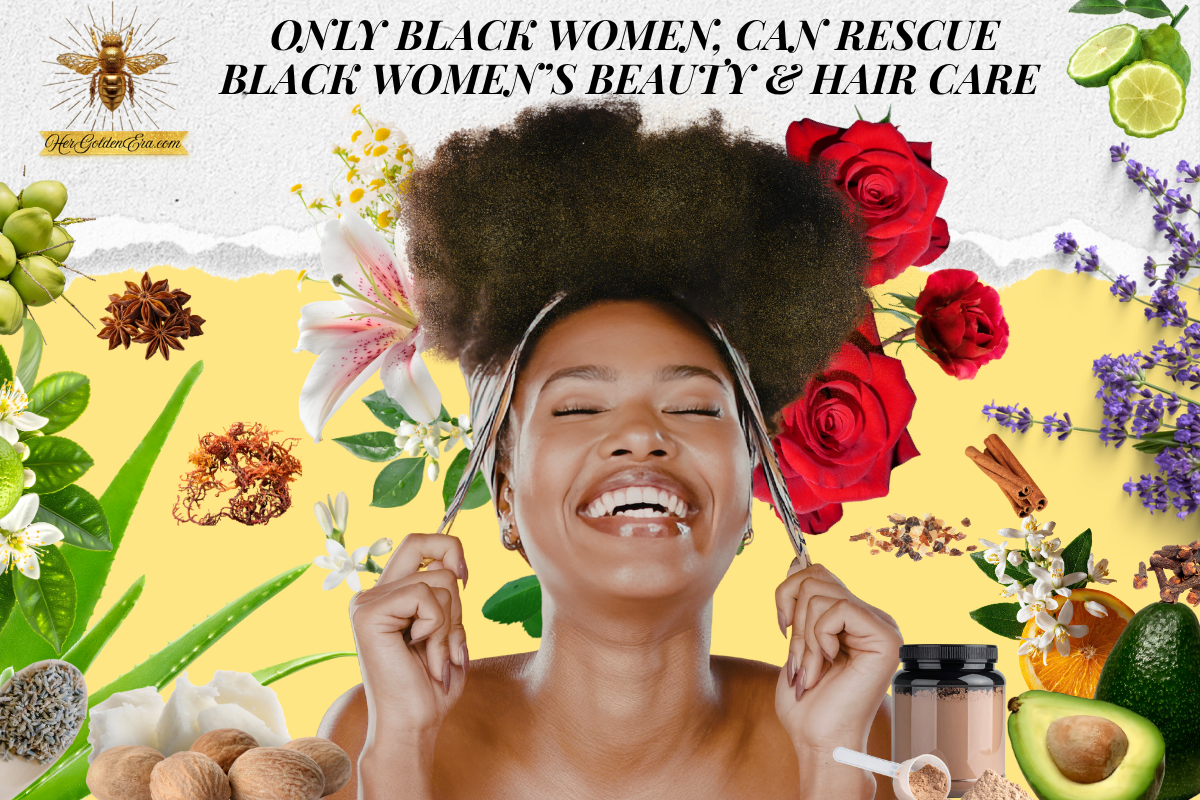
There is a beauty revolution happening quietly. It isn’t happening on a runway in Paris or inside a laboratory in Seoul. It is happening in kitchens, cooperatives, farms and coastal communities across Africa, where women have been working with shea, cocoa, oils, botanicals and sea plants for generations.
And increasingly, Black women around the world are asking a surprisingly important question:
What Exactly are We Putting on Ourselves?

For decades, Black women have been some of the beauty industry’s most devoted consumers while simultaneously being among the least satisfied with the products available to them.
The numbers tell an extraordinary story.
McKinsey estimated that Black consumers in the United States spent approximately $6.6 billion on beauty in 2021, representing 11.1 percent of total U.S. beauty spending.
Yet Black-owned brands accounted for only about 2.5 percent of beauty-industry revenue.
 Black consumers were also three times more likely than non-Black consumers to report dissatisfaction with available beauty products.
we are spending. We are influencing. We are searching.
But perhaps we have not been given enough information about what is actually inside the bottle.
The ingredients conversation
A landmark 2018 study examined 18 hair products commonly used by Black women, including leave-in conditioners, hair lotions, root stimulators, anti-frizz products, hot-oil treatments and relaxers.
Researchers detected 45 chemicals associated with endocrine disruption or asthma-related effects.
Every category of targeted chemical was represented.
Parabens, fragrance-related chemicals and cyclosiloxanes were among those detected at notable levels.
Perhaps most unsettling was the labeling issue:
researchers reported that 84 percent of the chemicals they detected were not listed on the product labels.
Note:
Not because every chemical detected is automatically dangerous at every exposure level.
But because Black women often use these products repeatedly. Sometimes daily. Sometimes for decades. Exposing women to unnatural and unsuspecting harm
Haircare is not a once-a-year exposure. It can be a lifetime relationship.
A woman may use a leave-in conditioner every morning, hair lotion several times a week and a relaxer every few months.

The cumulative question therefore becomes important. And scientists are beginning to ask it.
A later study involving 425 reproductive-age Black women found that recent hair-product use was associated with higher urinary concentrations of several endocrine-disrupting chemical biomarkers, including certain phthalates and parabens.
Another laboratory study examined six commonly used Black hair products and found that all six demonstrated some form of hormonal activity in laboratory receptor assays.

The researchers emphasized that the health implications of those findings remain uncertain, but the biological activity was real enough to warrant further investigation.
This is where the conversation becomes bigger than hair.
The Relaxer question
Chemical straighteners deserve particular attention.
In 2022, researchers from the U.S. National Institutes of Health reported that women who used chemical hair straighteners more than four times a year had more than twice the risk of uterine cancer compared with women who reported never using them.
The study included nearly 34,000 women.
 Importantly, the researchers could not conclude that relaxers definitively caused uterine cancer. However, observational studies can identify associations, not prove causation.
But the association was significant enough to warrant serious attention.
The concern is particularly relevant to Black women because chemical straighteners have historically been used more frequently in Black communities.
And there is another layer to this story.
The beauty ideal itself.
For generations, Black women have been taught, sometimes explicitly and sometimes subtly; that our natural hair needed to be controlled before it could be considered professional, elegant or beautiful.
The result was an extraordinary economic ecosystem built around changing the texture of Black hair. But today, women have more choices.
 Natural hair. Braids. Locs. Wigs. Protective styles. Silk presses. Twists. Afros.
And increasingly, formulations designed around textured hair rather than attempting to make textured hair behave like something else. Choice is power.
But information is power too.
Africa has the Answer
Africa’s answer to the beauty conversation may be sitting in plain sight.
After all a mother always knows how to take care of her own daughters
Shea butter. Cocoa butter. Baobab oil. Marula. Moringa. Aloe. Black soap. Seaweed.

These African ingredients are not new discoveries. They are part of African material and maternal feminine culture.
Shea, in particular, has deep economic and cultural significance across West Africa.
Women have historically played central roles in collecting, processing and marketing shea, making the ingredient not simply a cosmetic commodity but part of a wider women’s livelihood economy.

That creates an intriguing possibility.
What if African raw materials became the foundation for a new generation of globally competitive Black-owned beauty brands?

Not products marketed with vague promises about being “natural.”
Products with traceability. Independent testing. Transparent ingredient lists. Responsible sourcing. Scientific formulation. And African ownership.
That is a very different proposition.

Natural Supports Safety, but Safety in Beauty must have standards
Africa does not need to sell Black women in America another fantasy. When so much is dependent on health
“Natural” must also mean care-for example, Essential oils can irritate skin if not used carefully with carriers oils such as sunflower Oils.
Botanicals can cause allergies if not carefully tested and used in correct quantities

The future of African beauty therefore cannot simply be about replacing synthetic ingredients with plants.
It has to be about combining heritage with chemistry.
Sourcing quality and working with a chemist to understand amounts for each formulation.
Usually, shea nuts and Marula converted to butter and oils can be sourced through women-led cooperatives which operate under high-quality standards.

Cocoa beans are transformed into butter for luxury body care under supervision of local officials and NGOS, however scaling for international markets with rigorous quality standards creates issues- as access to labs for finished products for testing becomes a material cost most small-scale farmers and processors cannot meet and this is where a problem meets opportunity.
Baobab formulated into premium skin products.

East African seaweed is also managed by female lead farmers and coops and has been developed into a carefully tested cosmetic ingredients.
The raw materials already exist.
The missing opportunity is often further up the value chain.

Africa has long yearned of exporting the commodity instead of and importing the finished luxury product , his dream will take a time to be properly realized.
As Africa increasingly holds more ground participating in scaling formulation, manufacturing, branding and distribution because that is where the real money lives- an opportunity presents itself.
–While Africa develops her infrastructure- quality materials such as oils, powders and butters abound; for the enterprising GOLDEN ERA woman seeking to take control of her own beauty industry once and for all.
Beauty as reclamation
There is something beautifully circular about this.
Our grandmothers understood African botanicals long before the global wellness industry discovered the word “clean.”
But we should not romanticize the past. We should improve upon it.

Take ancestral knowledge. Add modern science. Add quality control. Add beautiful packaging. Add international distribution. Add women entrepreneurs. And build something extraordinary.
The Black woman does not need a beauty industry that tells her what is wrong with her hair, her skin or her body.

She needs an industry that respects her enough to give her quality ingredients and if she cant depend on the government in her country to protect her from harm-she must do it herself!
For a Golden Era Woman- perhaps the next great beauty story will not begin with another miracle cream invented somewhere else by someone else for her to use against her own nature.
Perhaps it will begin in Africa.
With a Black woman + an African Woman + A shea nut. or A seaweed farm+ A laboratory=A brilliant formulation.

And the audacious idea that beauty products created for us, by us, from ingredients connected to our own heritage can become some of the most sophisticated products in the world. That is not simply beauty. That is reclamation and POWER.