

The Guangzhou Playbook
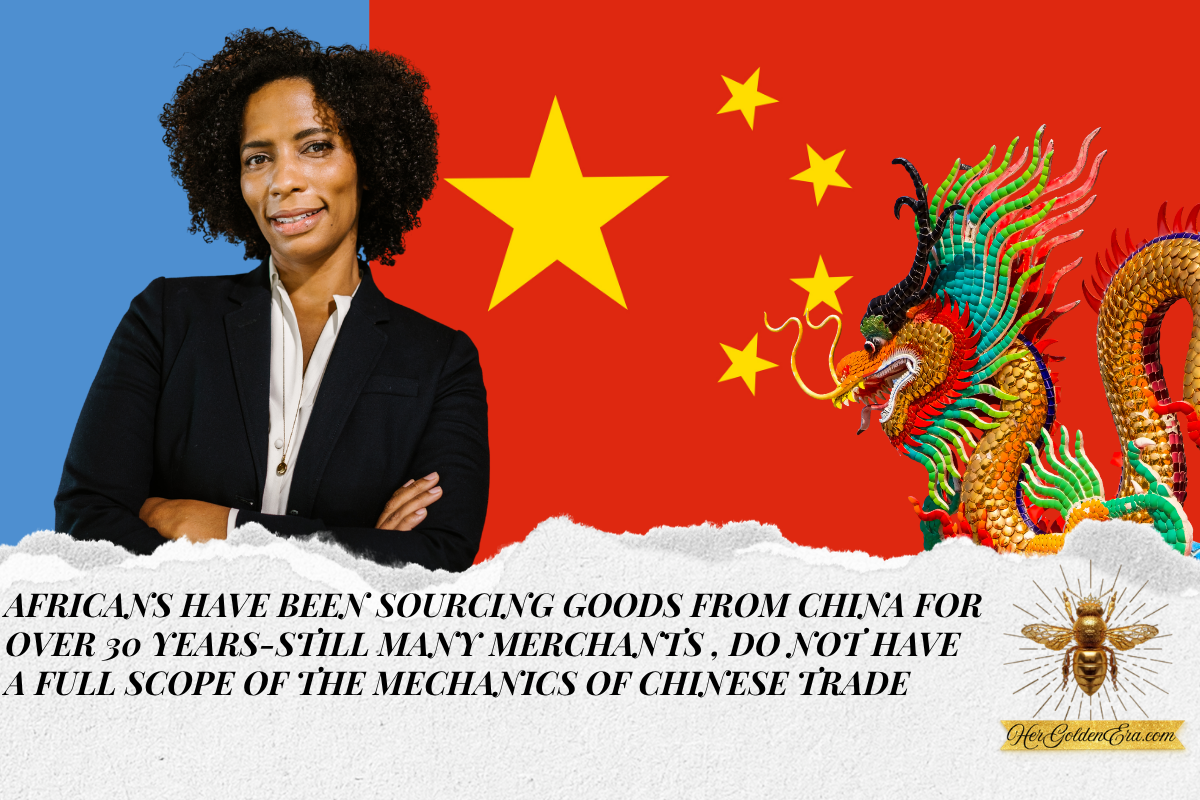
Africa has been trading with China for decades.
Now a new generation of women entrepreneurs is learning how to turn the journey from Guangzhou into a global business strategy.
There is a moment in Guangzhou when the sheer scale of commerce becomes almost cinematic.
A woman walks into a wholesale market looking for handbags.
Three hours later, she has seen shoes, jewelry, fabrics, cosmetics packaging, homewares, electronics and machinery, often in quantities and at prices that would have seemed impossible from her home market.
African traders have been traveling to southern China for decades, particularly since China’s economic opening accelerated in the 1990s.
Guangzhou became a major destination for African merchants precisely because factories, wholesalers, logistics companies and international traders converged there.
Academic research describes the city as a major export hub and documents the transnational networks African traders built between Guangzhou and markets across the continent.
In neighborhoods such as Xiaobei and Guangyuanxi, African commercial communities developed around restaurants, services and wholesale trading businesses.
The relationship between Guangzhou and Africa became not simply commercial, but social.
Today, the opportunity is evolving again. And increasingly, she is the buyer.
Why Guangzhou?
Guangzhou sits inside Guangdong’s enormous manufacturing ecosystem.
A trader isn’t necessarily traveling thousands of miles to find one factory. She is entering an ecosystem where manufacturers, wholesalers, agents, freight forwarders, packaging companies and logistics providers operate within reach of one another.
For a fashion entrepreneur, that can mean fabric in the morning, samples in the afternoon and packaging discussions before dinner.
For a restaurant owner, it could mean commercial equipment.
For a beauty entrepreneur, bottles, jars, pumps, boxes and labeling.
For a hotel developer, furniture, lighting and fixtures.
For a retailer, thousands of SKUs.
And for an ambitious woman, perhaps the beginning of a business she could never have afforded to manufacture from scratch at home.
But there is a dangerous misconception:
Cheap at the factory does not necessarily mean profitable at home.
That is where the real Guangzhou education begins.
The first question isn’t “How cheap?”
It is:
What will this actually cost me when it reaches my customer?
Suppose a handbag costs $8 in Guangzhou.
Beautiful.
- Then add domestic transport to the warehouse. PLUS
- Inspection.
- Packaging.
- Freight.
- Insurance.
- Port charges.
- Customs clearance.
- Import duties.
- VAT or other taxes.
- Clearing-agent fees.
- Warehousing.
- Local transportation.
- Damage.
- Currency fluctuations.
- Marketing.
- Retail overhead.
- And your own margin.
Suddenly your $8 handbag may have a landed cost of $15—or considerably more.
And if your customer can only afford $18, you may have created a business with a beautiful product and almost no profit. That is why experienced importers calculate landed cost before placing the order, not after the container arrives.
The container decision
This is one of the first decisions a new importer must understand.
LCL: Less than Container Load
If you do not have enough merchandise to fill an entire container, your cargo can travel as LCL.
Your goods share container space with other shipments.
For a new entrepreneur testing a product, this can reduce the capital required for an initial shipment.
But there is a trade-off.
LCL can involve additional handling, consolidation and deconsolidation charges. Your shipment may also move through additional logistics points.
It is not automatically cheaper simply because you are shipping less.
FCL: Full Container Load
With FCL, you effectively reserve the container for your shipment.
You might choose a 20-foot or 40-foot container depending on the cargo.
The economics can become attractive when you have enough volume.
But filling a container with a product nobody wants is a spectacularly expensive way to discover a bad business idea.
The sophisticated importer therefore asks:
Have I proven demand before I scale the shipment?
That single question can save a fortune.
Who pays the freight?
This is where international trade vocabulary suddenly becomes very important.
The supplier may quote you EXW, FOB, CIF, DAP, DDP or another Incoterm.
These terms determine how responsibilities, costs and risks are divided between buyer and seller.
For example, under FOB, the seller generally handles delivery to the named port and export formalities, while the buyer assumes the main ocean freight and subsequent costs.
Under CIF, the seller arranges cost, insurance and freight to the named destination port, although the buyer still handles important import-side responsibilities and costs.
And DDP can place substantially more responsibility on the seller.
The lesson?
Never accept a price without asking what the price includes.
“$5 per unit” is meaningless without knowing where that $5 stops.
Your documents are part of the merchandise
A professional importer should expect documentation such as a commercial invoice, packing list, transport document or bill of lading, and any applicable licenses or certificates. China’s customs rules specifically identify contracts, invoices, packing lists, manifests, bills of lading/waybills and required licenses among documentation relevant to customs declarations. (Customs.gov.cn)
Depending on the product and destination, you may also need:
- Certificate of origin
- Product test reports
- Health or phytosanitary certificates
- Safety certificates
- Conformity documentation
- Import permits
- Insurance documents
- HS classification
- Manufacturer specifications
- Ingredient lists
- Labeling documentation
The exact requirements belong to the importing country, not simply China.
That distinction is crucial.
The certificate trap
A manufacturer saying “we have certification” should never end the conversation.
It should begin another one.
Which certification?
- For what product?
- Issued by whom?
- For which factory?
- For which model?
- Is it current?
- Can the certificate be independently verified?
China has its own compulsory product-certification system, known as CCC, covering specified products where certification is required. Chinese authorities state that covered products cannot be released from factories, sold, imported or used commercially without the required certification and mark. (SAMR)
But CCC does not mean your importing country automatically considers the product compliant with its own regulations.
A children’s product, cosmetic, electrical appliance, food product or medical device can face entirely different requirements once it enters Tanzania, Kenya, Nigeria, Ghana, the United States or another destination.
That is why the clever importer researches both sides of the border.
The prohibited-goods list belongs on your phone
Before paying a supplier, ask:
Is this product legal to import into my country?
Some countries restrict or prohibit particular foods, medicines, chemicals, agricultural products, counterfeit goods, weapons, used equipment, cosmetics or electrical products.
Others require pre-shipment inspection or special registration.
China also maintains controls over certain exports, while importing countries maintain their own restrictions. Chinese foreign-trade law provides for restrictions, quotas and licensing for specified goods and technologies. (CECC)
So before you fall in love with a product in Guangzhou, check the destination country’s customs authority.
Because a supplier can legally sell you something that you cannot legally import.
That is an expensive lesson.
The warehouse is part of the business
One of Guangzhou’s great advantages is the logistics ecosystem surrounding its markets.
You don’t necessarily have to buy everything and immediately put it on a ship.
A sourcing agent or warehouse can consolidate products from multiple suppliers.
Imagine buying:
500 handbags from Factory A.
1,000 dresses from Factory B.
Packaging from Factory C.
Shoes from Factory D.
Rather than shipping four separate consignments, a logistics partner can consolidate them.
But again, ask the questions.
- Who owns the warehouse?
- How much is storage?
- How are goods counted?
- Who inspects them?
- What happens if a supplier sends the wrong color?
- Who pays for damaged merchandise?
- When does the warehouse become responsible?
- And who is authorized to release the cargo?
A beautiful supply chain is only beautiful when everyone knows who is responsible for what.
The Guangzhou hospitality advantage
One reason the China–Africa commercial relationship has endured is that Guangzhou developed services around international traders.
- Translation.
- Sourcing agents.
- Freight forwarding.
- Hotels.
- Restaurants.
- Money-transfer services.
- Wholesale markets.
- International shipping.
And communities of African entrepreneurs who understand the particular challenges of doing business between China and Africa.
The city does not require an entrepreneur to reinvent the wheel.
But she does need to learn how to distinguish hospitality from due diligence.
A friendly supplier is wonderful.
A verified supplier is better.
The smartest woman in the room asks one final question
Not:
Can I buy this cheaply?
But:
Can my market absorb the final price?
That question should determine everything.
A product can be spectacularly inexpensive in Guangzhou and still fail in Dar es Salaam, Lagos, Accra, Kingston or Atlanta.
Why?
Because customers have limits.
Competitors exist. Local alternatives exist. Taxes exist. Transport exists. And consumers compare.
Before ordering, calculate:
Factory price + inland transport + freight + insurance + customs + taxes + clearance + warehousing + local delivery + marketing + overhead = landed business cost.
Then ask:
What can my customer realistically pay?
And finally:
Is there enough margin left to make the business worthwhile?
That is the difference between shopping and sourcing.
From Guangzhou to global
The most exciting part of the Guangzhou story is not that African entrepreneurs can buy cheaply.
It is that they can participate in a global manufacturing ecosystem.
A Tanzanian woman can source packaging in China, formulate products in Africa and sell them internationally.
A Nigerian designer can source textiles and hardware and create a luxury label.
A Ghanaian entrepreneur can build a furniture company around Chinese manufacturing while owning the brand, distribution and customer relationship.
An African American woman can create a sourcing partnership connecting African producers with Chinese manufacturers and diaspora consumers.
The possibilities are enormous.
But the women who win will not necessarily be the ones who find the cheapest supplier.
They will be the ones who understand the entire journey from factory floor to customer’s hands.
And perhaps that is the real Guangzhou playbook.
China can manufacture.
Africa can trade.
The diaspora can finance, brand and distribute.
And women can sit at the center of all three.
The journey begins with a product.
But the destination should be an enterprise.