

Africa’s Chocolate Opportunity
As global chocolate manufacturers experiment with cocoa substitutes and reformulations, African farmers and consumers are asking a very simple question:
If Africa grows the cocoa, why shouldn’t Africa make the chocolate?
What If Africa Stopped Exporting Cocoa — and Started Selling Chocolate?
This ia an interesting viewpoint because Africa does not have a cocoa problem.Africa has a value problem.
The continent produces the majority of the world’s cocoa beans, yet for generations much of that cocoa has left Africa as a raw agricultural commodity and returned as a finished consumer product carrying someone else’s brand, packaging, marketing and margin.
Now a new opportunity is emerging.
For African entrepreneurs, cooperatives, investors and members of the African diaspora, that question could become the beginning of an entirely new food-manufacturing industry.
Lets Inveatigate this delicious proposal together.
The Cocoa Is Already Here

Africa is not trying to build an industry around an imported crop.
The raw material is already on the continent.
The International Cocoa Organization estimates that Africa produced about 3.1 million tonnes of cocoa in the 2023/24 season — approximately 71% of world production. Côte d’Ivoire, Ghana, Nigeria and Cameroon are among the continent’s largest producers.
Côte d’Ivoire is already investing heavily in local processing. The country is targeting substantially greater domestic processing by 2030, while a new state-owned facility near Abidjan has been designed to process approximately 50,000 tonnes of cocoa annually.
So the question is changing from:
“Can Africa process cocoa?”
to:
“How much more of the cocoa value chain can African businesses own?”
From Cocoa Bean to Chocolate Bar
A cocoa bean is only the beginning.
A simplified processing chain looks like this:
Cocoa beans → cleaning → roasting → cracking → winnowing → cocoa nibs → grinding → cocoa liquor
From there, the cocoa can become several valuable products.
Cocoa powder
Cocoa liquor can be pressed to separate cocoa butter from cocoa solids.
The remaining cocoa cake is crushed and milled into cocoa powder.
That powder can be sold to:
- bakeries
- restaurants
- beverage manufacturers
- ice-cream companies
- biscuit manufacturers
- hotels
- supermarkets
- food processors
- cosmetics manufacturers
Cocoa butter
Cocoa butter is another valuable product.
It can be sold to chocolate manufacturers and used in food, cosmetics and personal-care products.
Chocolate
The cocoa liquor can also go directly into chocolate production.
The basic chocolate-making process involves combining cocoa ingredients with ingredients such as sugar and, depending on the product, milk or alternative milk ingredients, followed by refining, conching, tempering, moulding and packaging.
The result is no longer a sack of agricultural commodity.
It is a consumer product.
And consumer products are where branding, distribution and retail margins become much more interesting.
The Cooperative Chocolate Factory
This is where the idea becomes particularly interesting for African investors and the diaspora.
Imagine the possibility of a group of African cocoa farmers, African entrepreneurs and African-American and African Diaspora investors forming a company or cooperative.
Instead of simply selling cocoa beans, they collectively invest in a processing facility.
The facility buys cocoa directly from participating farmers or farmer cooperatives.
The farmers continue farming.
But now the investment group owns part of the machinery that transforms those beans into:
cocoa powder + cocoa butter + cocoa liquor + chocolate.
The factory could then sell its products across Africa.
That could create a new business model:
Farmer → Cooperative → Processing Plant → African Brand → African Consumer
It Doesn’t Have to Begin With a Giant Factory
One of the most exciting things about cocoa processing is that the first plant does not have to be enormous.
Small-scale equipment is already available for processing cocoa beans into nibs, liquor, cocoa butter and powder. Commercial suppliers advertise small lines around 100 kg/hour, while modular systems have been developed that can produce cocoa liquor, butter, powder or chocolate in relatively compact facilities.
That opens the door to a pilot factory.
Instead of attempting to compete immediately with multinational manufacturers, an African investment group could establish a relatively small plant, prove the market, build distribution and then expand.
That is a more approachable proposition from building a 50,000-tonne industrial plant from day one.
THE CHOCOLATE LESSON FROM JAMAICA: HIGHGATE

How Jamaican Chocolate Became a Community Business
There is a reason the name Highgate still means something to many Jamaicans.
Long before today’s bean-to-bar movement, Jamaica had already demonstrated that cocoa could be transformed at home into a recognizable chocolate industry — and that a chocolate factory could become much more than a manufacturing plant.
It could become part of the economic life of a community.
A Factory Built Where the Cocoa Was Grown
In November 1966, Jamaica Food Products Company established a chocolate confectionery factory in Highgate, St. Mary, approximately one mile from the Richmond cocoa fermentary. The factory occupied about 32,500 square feet and was built by the Jamaica Industrial Development Corporation, with machinery purchased from companies in the United States and Italy. Its first production manager, Charles Liddlard, was recruited from Fry-Cadbury in Montreal.
The location was significant.
This wasn’t simply a company importing finished chocolate into Jamaica and putting a Jamaican label on it. The factory was situated close to one of the country’s cocoa-producing and fermenting centres, creating a direct relationship between agricultural production and manufacturing.
Historical accounts of St. Mary credit the factory with stimulating cocoa production, providing employment and generating export earnings for the parish. By the 1980s, Highgate had become an established Jamaican chocolate name, and in 1987 its chairman and managing director, Claude Clarke, reported projected chocolate sales of $2.5 million in the United Kingdom.
That is the part of the cocoa story that is so often overlooked.
A cocoa-growing country does not have to stop at the farm gate.
It can grow the bean, ferment it, process it, manufacture chocolate, distribute it and sell the finished product.
And every additional step creates another opportunity for someone to earn.
HIGHGATE WAS MORE THAN JUST CHOCOLATE
By the time Highgate Foods was operating under Claude Clarke, the company had become a major player in Jamaica’s chocolate market.
Contemporary reporting described Highgate as having control of the local chocolate-bar market for years. The company produced a range of chocolates, with its fruit-and-nut offering particularly well known, and its products reached both local and international markets.
The factory eventually ran into serious financial difficulties.
Highgate entered receivership in 2006. Reporting at the time pointed to a combination of economic pressures, debt, declining market share and an under-utilised manufacturing capacity. Clarke also argued that the company lacked the financing needed for an adequate marketing and distribution programme.
The factory’s closure had consequences beyond the company itself.
The Jamaica Observer later reported that the closure resulted in workers losing their jobs and contributed to the decline of Richmond, where much of the workforce had lived.
That is an important lesson for anyone thinking about cocoa processing today.
A factory can become part of the economic infrastructure of an entire community.
When it succeeds, the benefits can spread outward.
When it disappears, the effects can spread outward too.
CHOCOLATE OUTSIDE THE SCHOOL GATES
There is another part of the Highgate story that I want to tell because it doesn’t appear in corporate histories or industry reports.
It is my personal memory — and the memory of many Jamaicans who grew up with Highgate chocolate.
Small-scale vendors could obtain wholesale milk chocolate slabs and turn them into something much smaller and more affordable for children.
The chocolate could be shaped into little balls, packaged into small bags — sometimes ten chocolate balls to a bag — and sold to children around schools.
Right outside the school gates.
This may sound like a tiny piece of the chocolate economy.
It wasn’t. It was a distribution system. It was micro-enterprise.
It was a way for somebody with a very small amount of capital to participate in the value chain of a national chocolate manufacturer.
The factory made the chocolate.The small vendor bought it.
The vendor portioned and packaged it. The children bought it.
And a household earned income.
That is precisely the kind of economic ecosystem that can disappear when we think of manufacturing only in terms of the factory itself.
The real opportunity is not simply what happens inside the factory. It is what the factory makes possible outside of it.
IMAGINE THAT MODEL TODAY
Now imagine a modern African cocoa processor deliberately building that ecosystem into its business model.
The factory could manufacture large-format chocolate slabs, couverture, cocoa liquor, chocolate drops or other products specifically designed for smaller businesses.
That is the model that makes the Highgate story particularly relevant to the cocoa opportunity we are discussing.
FROM ONE FACTORY TO AN ENTIRE BUSINESS ECOSYSTEM
The modern version of Highgate could go much further.
Instead of asking:
“How do we create one successful African chocolate brand?”
the better business question may be:
“How do we build the factory that allows hundreds of African chocolate businesses to exist?”
THE CHILDREN SHOULD KNOW COCOA
There is another reason Highgate should be deeply studied.
If children grow up in a cocoa-producing country but the chocolate they know comes almost exclusively from somewhere else, they may never develop a relationship with the crop growing around them.
Imagine if all a boy from Ghana knew of chocolate was from the taste of synthetic or lab designed cocoa?
Wouldnt that mean the death and collapse of the farming and processing industey and the communities and families which depend on it?
When we remive the child feom the finished product- we remove the future farmers, processors, producers, exporters, consumers and writers from the entire equation.
Imagine the alternative.
A child in Ghana eating chocolate made from Ghanaian cocoa.
A child in Jamaica tasting chocolate made from Jamaican cocoa.
A child in Côte d’Ivoire eating a locally manufactured chocolate bar made from cocoa grown in Côte d’Ivoire.
A child in Tanzania tasting chocolate made from cocoa grown in Tanzania.
It is a connection between farmer, factory, entrepreneur, community, consumer and THE FUTURE
Children should be able to taste the crop their country grows.
They should know what it becomes.
And they should be able to see that the journey from cocoa pod to chocolate bar can create businesses, jobs and wealth in their own communities.
THE CHOCOLATE LESSON FROM JAMAICA TO AFRICA
Highgate for a time was a great success, but was not able to go further as a company because it didnt get the kind of support requited to mainyain scale in manufacturing.
But Highgate as a lesson and a viable model still remains.
Jamaica has continued to produce cocoa and develop local chocolate makers. Jamaica’s agricultural regulator says the country is recognised internationally for fine or flavour cocoa, and recent reporting has documented a growing group of local chocolate makers using Jamaican beans in products sold domestically and internationally.
One Jamaican entrepreneur, Averell French, built a vertically integrated operation producing chocolate and cocoa products from locally grown cocoa, while newer companies such as Pure Chocolate Jamaica and One One Cocoa have continued building local processing capacity.
Even more tellingly, Jamaica’s current chocolate sector includes cottage-scale producers making everything from chocolate bars to traditional chocolate balls used for hot chocolate beverages.
“Highgate showed what is possible — and the next generation has the opportunity to build the model better.”
With modern equipment, stronger financial management, better distribution, private-label manufacturing, export markets, digital marketing and deliberate support for small businesses, a cocoa-processing factory can potentially become an economic platform rather than simply a chocolate company.
THE BIGGER IDEA
Africa already grows an enormous share of the world’s cocoa.
The question is what happens after the cocoa leaves the farm.
Does the farmer sell the raw commodity and watch the greater value accumulate somewhere else?
Or can the cocoa move through a chain of African businesses:
FARMER → FERMENTATION → PROCESSING → CHOCOLATE → SMALL BUSINESS → BRAND → RETAIL → CONSUMER
Highgate gives us a Jamaican example of what happens when some of that chain is brought home.
And that little bag of chocolate balls sold outside a Jamaican school may actually tell us something just as important as the factory itself.
Big manufacturing does not have to compete with small business.
Done properly, it can create the raw material, products, packaging formats and supply chain that allow thousands of small businesses to participate.
That is the cocoa opportunity worth looking at.
Not simply making chocolate.
Building the infrastructure that makes it possible for everyone else to make money from chocolate too.
A Small African Cocoa Factory: What Could It Look Like?
Here is a conceptual example for an investor to formulate his ideaa.
This is an illustrative planning model, not a supplier quotation or completed feasibility study do your own research.
EXAMPLE : A facility designed around approximately 200 tonnes of cocoa beans per year, with semi-automatic processing and the ability to make both cocoa ingredients and finished chocolate.
The factory may need :
- cocoa bean receiving and storage
- cleaning equipment
- roasting equipment
- cracking and winnowing equipment
- nib grinding equipment
- cocoa liquor processing
- cocoa pressing equipment
- cocoa cake crushing and milling
- cocoa powder packaging
- chocolate refining/conching
- tempering equipment
- moulding equipment
- cooling
- chocolate packaging
- finished-product storage
- quality-control laboratory
A small factory could operate in stages rather than trying to maximize every product simultaneously.
A Conceptual Production Model
Suppose the factory processes approximately 200 tonnes of cocoa beans annually.
The beans could be divided between ingredient production and chocolate production.
For example:
| Product | Illustrative annual output |
|---|---|
| Cocoa powder | ~40–50 tonnes |
| Cocoa butter | ~40–50 tonnes |
| Cocoa liquor allocated to chocolate | ~80 tonnes |
| Finished chocolate after adding other ingredients | Potentially well over 100 tonnes |
| 100g chocolate bars | Potentially more than 1 million bars |
The exact output would depend on bean characteristics, pressing ratios, chocolate formulation and how much cocoa is allocated to each product.
The important point is that one cocoa bean can create several revenue streams.
The REAL OPPORTUNITY
| Product | Approx. 2026 global market | What it means |
|---|---|---|
| Chocolate confectionery | $147B–$184B | Finished chocolate bars, filled chocolates, pralines, etc. (Statista) |
| Cocoa powder | ~$24.8B | Baking, beverages, confectionery, dairy and food manufacturing. (Fortune Business Insights) |
| Cocoa butter | ~$11.4B | Chocolate, cosmetics, personal care and pharmaceutical applications. (Grand View Research) |
| Cocoa liquor/mass | ~$13.6B | Core industrial ingredient for chocolate manufacturing. (360iResearch) |
| Cocoa + chocolate ingredients/market | ~$58.7B under one narrower definition | Includes cocoa ingredients and chocolate but uses a different market definition from the confectionery estimates. (Fortune Business Insights) |
Chocolate bars alone are not the whole opportunity.
The cocoa bean can generate several commercial products before it ever becomes a chocolate bar.
THE PROCESS EXAMPLE
Current processing references indicate that one tonne of cocoa beans can produce roughly 800 kg of cocoa liquor, from which pressing can yield approximately 400–450 kg cocoa butter and 350–400 kg cocoa powder, depending on the extraction process and bean characteristics. (chemtradeasia.sg)
For the illustration below, I’m going to use:
- 41% butter
- 39% cocoa powder
- 18% processing loss/other material
That is a simplified full-pressing model, not an engineering specification.
For current indicative selling prices, 2026 cocoa powder references range from roughly $3,200–$3,400/tonne for commodity powder to more than $4,200 for specialty grades, while current international cocoa-butter transactions can be substantially higher. (Food Ingredients Asia)
So let’s use conservative-to-midrange planning prices rather than fantasy retail prices.
100 tonnes of cocoa beans per year
Approximately:
- 41 tonnes cocoa butter
- 39 tonnes cocoa powder
At illustrative wholesale values of:
- Butter: $7,500/tonne
- Powder: $3,500/tonne
That produces approximately:
$307,500 butter revenue
$136,500 powder revenue
=
~$444,000 annual product revenue
before processing costs, packaging, labor, financing, transport, taxes and other expenses.
A MID SIZED 500-Tonne Factory
Now we’re getting interesting.
Annual cocoa input: 500 tonnes
Approximate output:
- 205 tonnes cocoa butter
- 195 tonnes cocoa powder
Illustrative revenue:
Butter: $1.54M
Powder: $683K
~$2.22 million annual revenue
from cocoa ingredients alone.
And remember: this is not the chocolate model.
A MID SIZE 1,000-Tonne Factory
Annual cocoa input: 1,000 tonnes
Approximate output:
- 410 tonnes cocoa butter
- 390 tonnes cocoa powder
Illustrative revenue:
Butter: $3.08M
Powder: $1.37M
~$4.45 million annual revenue
from the ingredient-processing model.
That’s a considerably more substantial industrial business.
What If the Factory Makes Only Chocolate ?
Suppose our 500-tonne facility uses its cocoa liquor to manufacture chocolate rather than pressing everything into butter and powder.
One tonne of beans can produce roughly 800 kg of cocoa liquor.
If we then formulate that liquor into a chocolate containing, for example, 50% cocoa ingredients, the resulting chocolate could be roughly:
800 kg cocoa liquor → ~1.6 tonnes finished chocolate
after adding sugar and other ingredients.
So:
500 tonnes cocoa beans
could potentially become approximately:
800 tonnes finished chocolate
depending on formulation and manufacturing losses.
At a hypothetical $8/kg wholesale selling price:
800,000 kg × $8
=
$6.4 million annual chocolate revenue
That’s wholesale revenue, before costs.
At $10/kg, it becomes:
$8 million
And at a premium branded/direct-distribution average of $15/kg, it becomes:
$12 million
The factory doesn’t necessarily have to choose one model, either.
The Hybrid Model
Lets Say a 500-tonne factory processing its cocoa like this:
500 tonnes beans
↓
Some cocoa → butter
Some cocoa → powder
Some cocoa → liquor
↓
Liquor → finished chocolate
That creates multiple revenue streams from the same raw material.
A Simple Investor Snapshot
| Factory | Cocoa beans/year | Ingredient-only revenue* | Potential finished chocolate revenue** |
|---|---|---|---|
| Pilot | 100 tonnes | ~$0.44M | ~$1.3–$2.0M |
| Small commercial | 500 tonnes | ~$2.22M | ~$6.4–$8.0M |
| Medium | 1,000 tonnes | ~$4.45M | ~$12.8–$16M |
| Large regional | 5,000 tonnes | ~$22.25M | ~$64–$80M |
* Illustrative butter + powder model using assumed wholesale prices; not profit.
** Illustrative model assuming approximately 1.6 tonnes finished chocolate per tonne of beans and wholesale selling projections
A 500-tonne cocoa-processing operation has the physical capacity to turn hundreds of tonnes of African cocoa into millions of dollars of higher-value ingredients and finished chocolate annually.
FROM BEAN TO BRAND
The African Cocoa Investment Opportunity Cost
What Might It Cost?
A small cocoa-processing project can range from a relatively modest pilot operation to a much larger commercial plant.
Published equipment and industry estimates show very wide ranges because the answer changes dramatically depending on capacity, automation, buildings, utilities, packaging and whether the project is producing only cocoa ingredients or finished chocolate as well. One current industry estimate puts very small processing projects in the hundreds of thousands of dollars, while small commercial facilities can move into the $500,000–$2 million range.
For a conceptual investor exercise, Her Golden Era could therefore examine something like:
Example: $500,000–$1 million pilot commercial facility
Possible allocation:
| Investment area | Illustrative allocation |
|---|---|
| Processing equipment | $250,000–$400,000 |
| Chocolate-making equipment | $75,000–$150,000 |
| Factory preparation/build-out | $50,000–$100,000 |
| Packaging/quality-control equipment | $30,000–$60,000 |
| Installation/utilities | $40,000–$80,000 |
| Initial working capital | $75,000–$150,000 |
| Indicative total | $520,000–$940,000 |
The actual figure would have to be established through an engineering design, equipment quotations and a country-specific feasibility study.
But this is precisely why a cooperative investment model becomes interesting.
A $750,000 project is a very different proposition when viewed as:
750 investors × $1,000 or 150 investors × $5,000 or 75 investors × $10,000
rather than asking one entrepreneur to finance the entire project alone .
A coop or group protects from single investor failure.
African Chocolate a delicious opportunity.
This is where I think the opportunity becomes particularly exciting.
The factory would not have to remain an ingredient supplier.
It could develop its own African chocolate brand.
Imagine a premium African chocolate line using:
Ghanaian cocoa + Zanzibari vanilla or Ivorian cocoa + Kenyan coffee or Nigerian cocoa + Nigerian peanuts or Ghanaian cocoa + Madagascan vanilla orWest African cocoa + African sea salt
or simply a beautiful single-origin African chocolate collection.
The packaging could tell the story of the farmer, the origin, the region and the African ingredients.
Instead of hiding the origin of the cocoa, the origin becomes the brand.
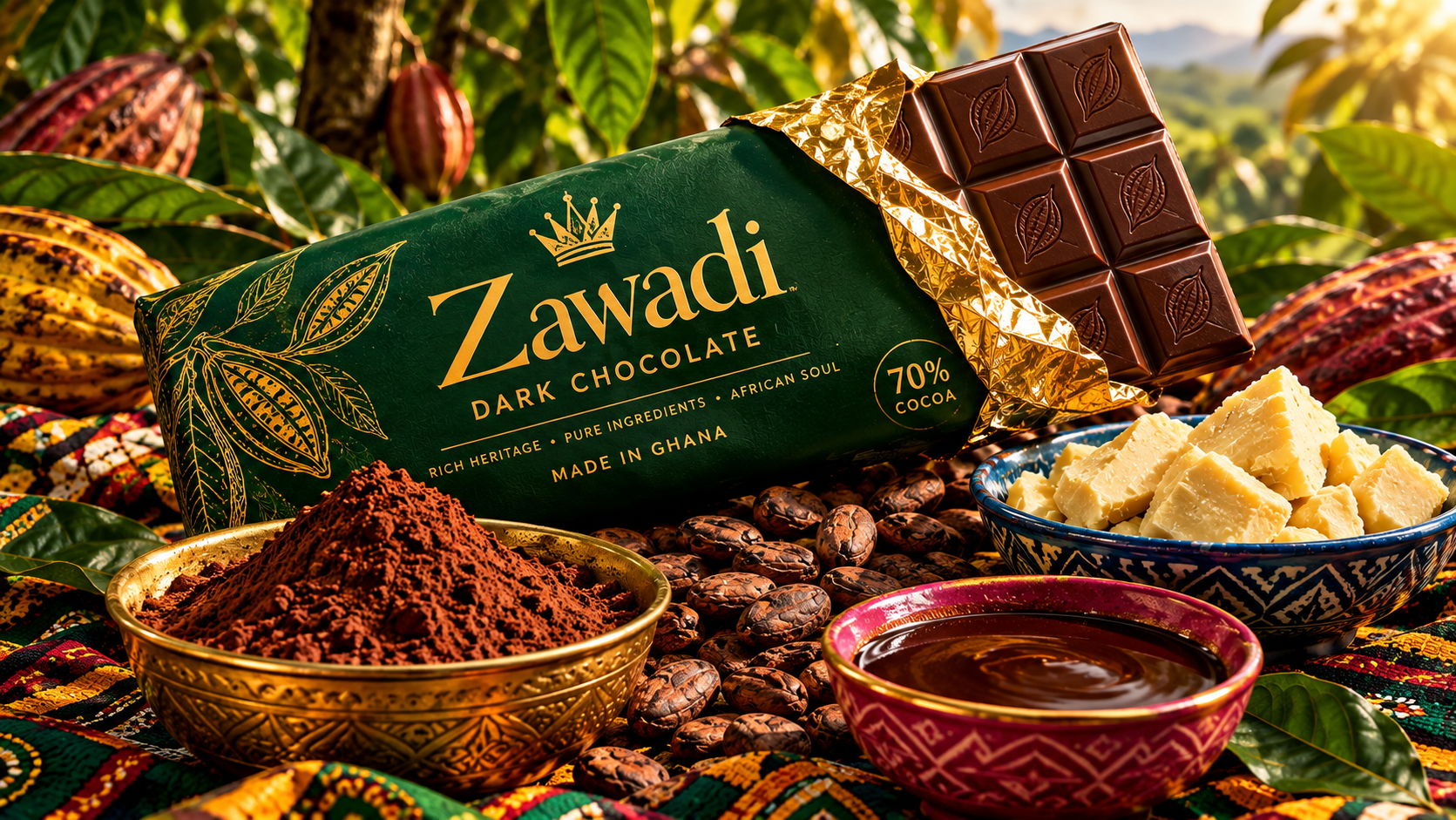
CHOCOLATE MADE IN AFRICA ..FOR AFRICANS.
Africa itself is a huge potential consumer market.
A factory does not necessarily need to convince American consumers to buy its first million chocolate bars.
It can sell locally to:
- supermarkets
- hotels
- airlines
- restaurants
- cafés
- gift shops
- tourism destinations
- corporate gift markets
- schools and universities
- African retailers
- bakeries
- food manufacturers
- online consumers
And then scale to export to other African countries.
Nigeria → Ghana → Côte d’Ivoire → Kenya → Tanzania → Rwanda → Uganda → South Africa → Egypt → diaspora markets
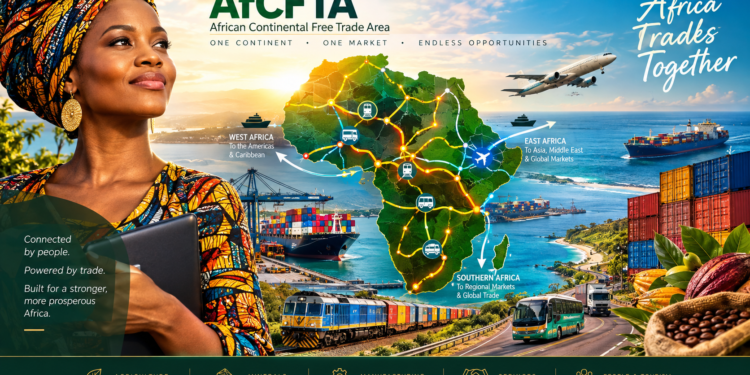
The African Continental Free Trade Area also creates a much larger framework for thinking about African consumer markets
The business can start locally and think continentally.
Africa Already Has Chocolate Entrepreneurs
African companies are already proving that chocolate can be made successfully at origin.
Ghana
57 Chocolate is a Ghanaian bean-to-bar company founded by sisters Kimberly and Priscilla Addison. Its products are made using Ghanaian cocoa and include culturally inspired Adinkra chocolate designs.
fairafric operates a chocolate factory in Ghana and produces chocolate from bean to bar in Ghana. Its current product range includes organic and vegan chocolate.
Ghana + Madagascar
MIA has built a model around making chocolate in Africa rather than simply exporting cocoa. The company currently works across Ghana and Madagascar and describes its model as “sourced and Made in Africa.”
Côte d’Ivoire
MonChoco produces chocolate using cocoa from West Africa and has received international recognition for its products.
South Africa
Afrikoa sources cacao directly from farmer cooperatives in Africa and produces its chocolate in Cape Town, with a large range of chocolate products.
Uganda
Latitude Craft Chocolate is another African bean-to-bar example.
Nigeria
Loshes Chocolate is part of the growing African craft-chocolate movement.
Madagascar
Chocolat Madagascar produces chocolate on the island using locally grown cocoa and has developed an international reputation for its origin-focused chocolate.
Other African makers include Ohene Chocolate, Chocomada, Lowa Chocolate and Srɔ̃nu, demonstrating that the African bean-to-bar movement is already geographically diverse.
And there are many more.
African Chocolate Is Already Reaching International Consumers
This may be the most important part of the story for African-American investors.
African chocolate does not necessarily have to remain in Africa.
Some African-origin brands already sell internationally.
For example, MIA operates from Ghana/Madagascar and has a European presence, while fairafric sells directly to international consumers from its Ghanaian operation.
Ethical Consumer’s current chocolate comparison also lists Ghana’s 57 Chocolate, Madagascar’s Chocolat Madagascar, fairafric Ghana and Côte d’Ivoire’s MonChoco among value-added-at-source chocolate products available to European consumers.
That creates an interesting diaspora proposition:
Make in Africa. Sell in Africa.Sell to the African diaspora.
Eventually sell to the world.
What About Making African Chocolate in America?
There is another model worth considering.
An African-American investment group could establish a company in the United States that purchases high-quality African cocoa directly or through African producer cooperatives.
The American company could then:
import African cocoa → process it → manufacture chocolate → sell to U.S. consumers.
That provides proximity to the enormous American premium-food market.
This model avoids red tape ans paperwork against finished african products that may prevent a simple make it in Africa and export it to America scenario.
Why Cocoa Powder May Be Just as Important as Chocolate
Chocolate gets the glamorous headlines.
But cocoa powder could be the quiet industrial opportunity.
Think about every business that uses cocoa:
- bakeries
- cake manufacturers
- biscuit companies
- ice cream
- breakfast cereals
- hot chocolate
- protein foods
- desserts
- restaurants
- cafés
- hotels
- beverage companies
An African cocoa-processing company could therefore become a B2B ingredient supplier, rather than depending entirely on consumers buying chocolate bars.
And because the same cocoa bean can produce powder and butter, the factory can develop multiple revenue channels.
The Greater Opportunity: An African Cocoa Cooperative
Now imagine taking this one step further.
Instead of building one company around one factory, establish an investment cooperative.
Farmers contribute through supply agreements. African investors contribute capital.African-American investors contribute capital, distribution relationships, marketing and access to diaspora markets.
Food scientists develop products. African designers build the brand. Retailers distribute the products.
The cooperative owns the processing business.
And perhaps, over time, the cooperative acquires or establishes additional factories.
One in West Africa. Another in East Africa.Another serving Southern Africa.
Suddenly this is no longer simply a chocolate factory.
It becomes an African food-manufacturing platform.
The larger question is:
What does Africa export as a raw material today that could become a finished African consumer brand tomorrow?
Cocoa is simply a delicious place to start but the opportunities in other sectors are endless.
THE CHOCO-COOP
African Cocoa Processing & Chocolate Cooperative
Concept:
A member-owned investment company that aggregates capital to establish cocoa-processing and chocolate manufacturing capacity in Africa.
Initial products:
- natural cocoa powder
- cocoa butter
- cocoa liquor
- premium chocolate bars
- drinking chocolate
- baking chocolate
- chocolate-covered nuts and fruits
- corporate gift boxes
Initial customers:
- African supermarkets
- hotels
- airlines
- restaurants
- cafés
- bakeries
- food manufacturers
- tourism businesses
- corporate clients
- African diaspora retailers
Long-term customers:
- United States
- United Kingdom
- Canada
- Europe
- Middle East
- international specialty-food markets
Ownership model:
Farmers + African investors + diaspora investors + strategic food-industry partners.
Core proposition:
Grow it here. Process it here. Brand it here. Sell it everywhere.
The Numbers to Investigate Next
Before anybody invests, the cooperative would commission a proper feasibility study answering seven questions:
1. Where should the first factory be located?
Ghana, Côte d’Ivoire, Nigeria, Cameroon, Tanzania, Uganda or another producing country could each offer different advantages.
2. How much cocoa can be secured annually?
The factory needs reliable farmer/cooperative supply agreements.
3. What products generate the strongest margins?
Powder, butter, liquor and finished chocolate should be modeled separately.
4. What size factory makes sense?
A 100 kg/hour pilot is a completely different business from a 1-tonne/hour commercial facility.
5. Where will the chocolate be sold?
The African market should be modeled first, with diaspora exports as a second growth channel.
6. What does the equipment actually cost?
Not an internet estimate — actual quotations from several equipment manufacturers.
7. How much capital is required for working inventory?
This is critical because cocoa itself is a major cash requirement. Côte d’Ivoire’s cocoa-processing sector, for example, has substantial working-capital requirements alongside its factory investment.
The Moment May Be Worth Watching

Africa produces 71 % of a Multi Billion Dollar Industry, yet poverty exists in the largest cocoa producers.. Maybe its time we woke up and smelled the Chocolate?
From Farmer to Factory Owner
Africa has already demonstrated that it can grow cocoa at extraordinary scale.
The next chapter is about moving further along the value chain.
A cocoa farmer should be able to sell a bean.
A cooperative should be able to sell cocoa powder.
A factory should be able to sell cocoa butter.
An African manufacturer should be able to sell chocolate.
And an African brand should be able to sit on a supermarket shelf in Accra, Dar es Salaam, Lagos, Nairobi, Johannesburg, London, Toronto and New York.
The world already knows African cocoa.
Perhaps it is time the world got to know African chocolate.
And perhaps the next generation of African and African-American investors shouldn’t simply ask where the cocoa is going.
They should ask who owns the machine that turns it into chocolate.
WHY THIS MATTERS TO GOLDEN ERA WOMEN
For Golden Era women looking for businesses and investment opportunities in Africa, cocoa represents far more than an agricultural commodity—it represents an opportunity to invest in the missing middle between Africa’s farms and the world’s chocolate market. The capital, technology, processing facilities, manufacturing expertise, branding and distribution needed to build that industry are all investable opportunities, and women with the resources and networks to bring them together could help create a new generation of African-owned cocoa businesses.

For women of African descent considering a return to Africa, some countries are creating clearer pathways to make that possible. Ghana, for example, offers a Right of Abode for people of African descent in the Diaspora, providing permanent residence and the right to work without a work permit. Benin has introduced a nationality pathway for eligible Afro-descendants who can document ancestry connected to the transatlantic slave trade, while Sierra Leone has citizenship provisions for people of African descent.
For the Golden Era woman, this opens an important question: what if “coming home” could also mean building a business, investing, owning property and creating a new chapter on the continent? The legal pathways differ from country to country, but the door is increasingly worth exploring.
What it needs is more people willing to finance, build and own the infrastructure that turns those beans into African wealth. And that investor could be you.
HER GOLDEN CHOCOLATE BARS
Women with capital, business experience, agricultural knowledge, distribution networks and international relationships can participate in ownership rather than simply consumption.
So here is the invitation: don’t just read about Africa’s cocoa opportunity—investigate it. Find the country with the right cocoa supply, study the processing economics, identify the factory and equipment requirements, speak with farmers and potential buyers, and determine what it would take to build a profitable processing and contract-manufacturing operation. Then bring investors to the table. Africa already has the cocoa. Lets not allow this valuable commodity to slip through our gold dusted fingers.
Imagine a group of African and African-American and African women coming together and saying:
We don’t just want to buy African products. We want to own the factories that make them.
Renae Bruce- Miller is a Jamaican- American Entrepreneur and Agro processing investor based in Dar es Salaam Tanzania
email: Renaebm@gmail.com