

HER GOLDEN RECOVERY
The Life You Built Is Gone. Now What?
There is a particular silence that arrives after something enormous ends.
The divorce papers have been signed, The children have gone to bed, The office has been emptied, The government badge has been surrendered, The house has been sold, The company has closed.
The phone that used to ring all day has suddenly become very quiet.
And there she is. Standing in the middle of a life she no longer recognizes. People love the language of new beginnings. Fresh start. New chapter. Reinvention.
It all sounds rather glamorous until you are the woman staring at the bank account wondering how the mortgage is going to get paid.
Starting over is not always a vision board, a passport and a linen dress. Sometimes it is paperwork. Sometimes it is panic. Sometimes it is crying in the car before going inside to pick up the children.
Sometimes it is realizing that the person you thought you would grow old with is now somebody you need a lawyer to communicate with.
And sometimes, particularly for Black women, starting over isn’t about divorce at all.
It is the sudden end of a career. A government restructuring. A layoff. A business failure. A retirement that arrived earlier than expected. A parent’s death.
A relationship that quietly ended years before anybody admitted it.
The common denominator is the same:
The life you depended upon has changed.
And now you have to build another one.
The Economic Shock Nobody Puts in the Wedding Album
Marriage is often described as an emotional partnership.
Economically, it is also a household system. Two incomes or one income and unpaid domestic labor-support one home.
One mortgage. One electricity bill. One refrigerator. One insurance structure. One set of furniture.
Then the marriage ends. And the arithmetic is brutal.
Research has consistently found that the economic consequences of divorce fall more heavily on women.
One frequently cited U.S. estimate found women’s standard of living declining by about 27% after divorce, while men’s increased by about 10%. (PubMed Central (PMC))
More recent research makes the picture even more sobering.
A 2025 study examining separation and poverty found that women with preschool-aged children experienced a 19.9-percentage-point increase in poverty risk in the first year after separation. Women who were not employed before separation were particularly vulnerable. (IZA)
And the racial dimension matters.
A recent study examining the economic consequences of divorce across racial and ethnic groups found that Black women’s income-to-needs levels fell by roughly 35–38% following marital dissolution, and about 35% of Black women in the study were living in poverty after the disruption. (PubMed Central (PMC))
So when somebody tells a newly divorced woman, “You’ll be fine,” she may be emotionally correct and financially useless.
She needs a plan.
Black Women Have Another Kind of Divorce
Consider the woman who has just lost a 25-year government career.
She isn’t divorced.
But tell her that when her security she worked so hard to build is gone, her salary is gone, her familiar office is gone, her professional identity is gone, and perhaps the home she could afford on that salary is suddenly unaffordable, that this is somehow not a life rupture.
No, It’s not a divorce feels like one!
The Fact is, Black women have historically had an unusually strong presence in the federal workforce. The EEOC found that African American women represented 11.7% of the civilian federal workforce in FY2020, compared with 6.6% of the civilian labor force. (EEOC)
That matters because the federal government has long been an important source of stable employment for Black Americans.
The recent restructuring of that workforce has therefore landed differently across communities.
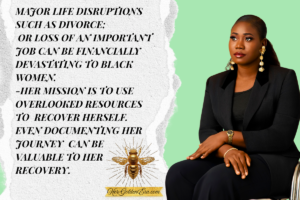
The federal workforce has been subjected to layoffs, buyouts, restructuring, return-to-office requirements and changes to employment protections. Reuters reported in August 2026 that the federal workforce had contracted by approximately 12% between 2024 and 2026, while unions were challenging new rules expanding the government’s ability to terminate employees deemed “unsuitable.” (Reuters)
This doesn’t mean every Black woman affected by federal cuts lost everything. It means something more important:
A career that appeared permanent was not necessarily permanent.
That is a lesson worth carrying forward. Not with fear. With preparation.
The First Rule of Starting Over: Stop Pretending You Are Fine
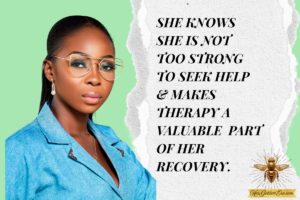
This may be the most important thing I can tell you:
You are allowed to be devastated, you are allowed to miss your marriage.
You are allowed to miss your colleagues. You are allowed to miss your old house. You are allowed to miss the woman you were before everything happened. You do not have to turn grief into gratitude by Tuesday.
The human brain doesn’t work that way. Major life transitions activate stress responses, disrupt routines and can affect sleep, mood, concentration and decision-making.
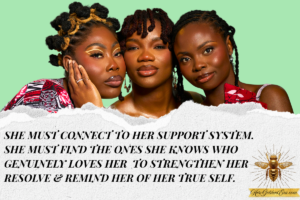
So before you build the empire, stabilize the woman who is supposed to run it.
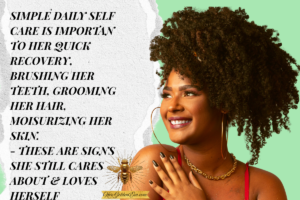
- She may need therapy.
- She may need medication when clinically appropriate.
- She may need walking every morning.
- She may need prayer.
- She may need Meditation.
- She may need Journaling.
- She may need Gardening.
- She may need Swimming.
- She may need Dancing around the kitchen while nobody is watching.
She may need calling the friend who knows how to make you laugh when you have forgotten how.
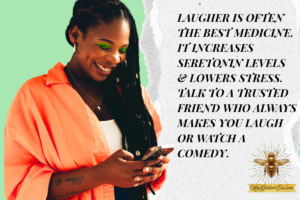
Exercise is particularly useful because it is not merely a fitness strategy. Physical activity can help reduce symptoms of anxiety and depression and improve overall well-being.
And there is increasingly interesting evidence around mindfulness-based interventions for stress management.
The goal isn’t to become a woman who never feels stress.
The goal is to become a woman who knows what to do when stress arrives.
The Ashwagandha Question
And yes, we should talk about supplements-but intelligently.
Ashwagandha has become one of the internet’s favorite herbs, which is usually the moment when Her Golden Era should become suspicious.
But there actually is research worth discussing.
A 2024 systematic review and meta-analysis of nine randomized controlled trials involving 558 participants found that some ashwagandha preparations produced reductions in perceived stress, anxiety and cortisol compared with placebo. (PubMed)
A larger 2026 meta-analysis covering 22 randomized trials and 1,391 adults also reported improvements in measures of stress, anxiety and depression, while emphasizing the need for better trials to establish long-term safety and the most effective dosing. (PubMed)
That is promising.
It is not permission to swallow everything labeled “ashwagandha.”
The quality of the preparation matters.
Recent research specifically examining standardized, root-only ashwagandha found generally reassuring short-term safety results, but researchers emphasized that long-term evidence remains limited. (PubMed Central (PMC))
The U.S. National Center for Complementary and Integrative Health also warns that ashwagandha may interact with medications and is not appropriate for everyone, including some people with thyroid or autoimmune conditions. Rare liver injuries have also been reported. (NCCIH)
So the Golden Rule is simple:
Choose quality. Know what is in the bottle. Tell your healthcare professional what you are taking.
A supplement can support a wellness plan.
It cannot replace one.
Now Let’s Talk About Money-The Black Woman’s Particular Challenge
Black women have already learned how to survive circumstances that were never designed for our comfort.
We have navigated
- racism.
- Sexism.
- Ageism.
- Caregiving.
- Economic inequality.
- Professional ceilings.
- Cultural expectations.
And the peculiar expectation that we should somehow remain composed while carrying an astonishing amount of weight. But survival has one dangerous side effect.
You can become so good at surviving that you forget you are allowed to build. So the next chapter needs a different philosophy.
Not:
How do I get back what I lost?
But:
What can I build now that I never had permission to build before?
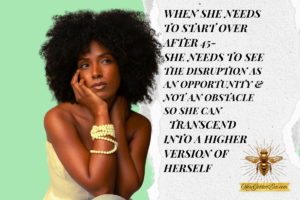
Because there is a point when crying has to stop.
Not emotionally.
Financially.
You need to know: How much cash do I have? How much debt? What does the house cost?What are the children’s expenses?
What insurance do I have? What am I entitled to? What accounts exist? What assets are jointly owned?
What happens to my retirement account? What happens to the business? What taxes are coming?
What happens if the income stops for six months? You need numbers.
Not vibes. Not only optimism.
Numbers.
And if you are divorcing, get professional legal and financial advice before making irreversible decisions.
Do not sell the house because you are angry. Do not sign away an asset because you are tired.
Do not empty a retirement account because you need immediate cash without understanding the tax consequences.
Do not let embarrassment keep you from asking questions. A lawyer is not a luxury when your future is being divided. Neither is a qualified financial planner invest in these services.
Then Build a Survival Income
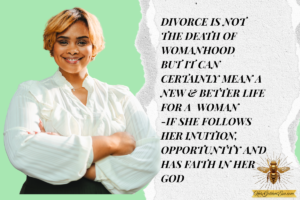
Your first income stream does not have to be your dream. It has to be reliable.
If employment is available and compatible with your childcare and circumstances, take it.
If you need a bridge, build one:
- Consult.
- Freelance.
- Tutor.
- Drive.
- Cater.
- Sell.
- Do administrative work.
- Manage social media.
- Do bookkeeping.
- Become a virtual assistant.
- Take contract assignments.
Offer services based on the professional skills you already possess.
There is no shame in a temporary income source.
The mistake is confusing the bridge with the destination.
Your delivery work may pay the electricity bill.
It does not have to become your identity.
The Kitchen May Be a Business
Here is where women underestimate themselves.
Perhaps you have an extraordinary kitchen. Maybe everyone tells you that your cakes are Amazin.
Good.
Start with six cakes. Not sixty. Six. Take good photographs. Create a simple page. Calculate ingredient costs.
Calculate packaging. Calculate delivery. Calculate profit. Ask whether people will actually pay.
Then improve.
Perhaps you love cooking; Perhaps your grandmother’s recipes are extraordinary.
Perhaps you make sauces, pastries, preserves, spice blends or specialty foods.
Your kitchen doesn’t have to remain a kitchen. It can become a production facility, The same principle applies everywhere.
The woman who loves reading can write. The woman who loves houses can study real estate.
The woman who understands children can build a childcare service. The woman who has spent twenty years organizing chaos can become a project manager. The woman who knows fabrics can source textiles.
The woman who knows beauty can build a beauty company. The woman who has spent her life caring for everyone else may finally discover that she has been developing marketable skills without realizing it.
You Are Not Too Old to Learn
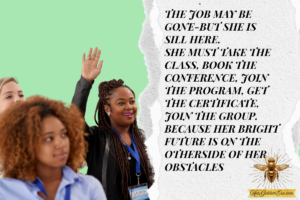
This is particularly important for women over 45.
The employment market may not reward every skill you once possessed.
Technology changes. Industries disappear.
Job titles mutate into acronyms.
Suddenly everybody wants “AI fluency,” and you are sitting there thinking, I survived Windows 95. Do I not get some credit?
You do. But update.
Short courses can be powerful.
- Real estate.
- Home inspection.
- Project management.
- Digital marketing.
- Bookkeeping.
- Procurement.
- Cybersecurity.
- AI tools.
- Hospitality.
- Trade certification.
- Healthcare support.
- Construction management.
- Export/import.
- Whatever makes sense for your market and your interests.
- You do not necessarily need another four-year degree.
- You need marketable capability.
And Then There Is the Dream
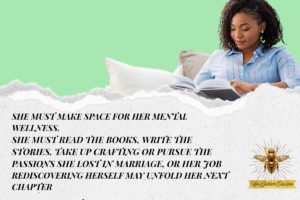
This is where starting over gets interesting. Because perhaps the marriage wasn’t the only thing that ended.
Perhaps the life you built was largely designed around somebody else’s needs.
The children needed you. The husband needed you. The employer needed you. The parents needed you.
The community needed you. Everybody needed something.
And somewhere in the middle of all that need was a little voice saying: What about me?
Starting over can be the first time you answer it.
Not recklessly. Decisively.
- Perhaps you always wanted to write a book.
- Make a film.
- Open a restaurant.
- Buy property.
- Build a fashion company.
- Become a real-estate investor.
- Start a consulting practice.
- Move to another country.
- Go back to school.
- Build a farm.
- Launch a podcast.
- Learn photography.
- Open an art studio.
You don’t have to do everything. You need to choose one thing worth pursuing.
But Don’t Romanticize Starting Over
This is where women can get themselves into trouble.
- A divorce happens.
- She becomes furious.
- She sells everything.
- Moves to Bali.
- Opens a restaurant.
Six months later she is eating instant noodles in a rented apartment wondering what happened.
Freedom is wonderful. Impulsiveness is expensive. Starting over requires a little ruthlessness.
Do not confuse liberation with recklessness.
Make the spreadsheet.
Check the visa.
Research the neighborhood.
Calculate taxes.
Build six months of emergency reserves if you can.
Get health insurance.
Understand the market.
Test the business.
Start small.
Then scale.
Your second life deserves better planning than your first one had.
Go Where the Ideas Are
One of the most underrated tools for reinvention is exposure.
Go to conferences.
Trade shows.
Industry exhibitions.
Investment seminars.
Real-estate events.
Fashion markets.
Food expos.
Technology conferences.
Women-in-business gatherings.
- Walk through the exhibition hall.
- Talk to strangers.
- Ask questions.
- Look at products.
- Watch what people are buying.
Pay attention to problems. Because businesses are born from problems,Someone is always complaining:
- I can’t find this.
- This costs too much.
- Nobody provides that.
- The quality is terrible.
- I wish somebody would…
There it is.
Your business idea may be hiding inside somebody else’s irritation.
Your House Is Not Your Identity
This one is painful.
Women often associate financial security with a physical home.
The house where the children grew up.
The kitchen where birthdays happened.
The bedroom where somebody once said I love you.
The neighborhood where everyone knows you.
Losing that can feel like losing yourself.
But a house is an asset.
A home is an emotional experience.
They are not the same thing.
You can make another home.
It may be smaller.
It may be somewhere completely different.
It may have a balcony instead of a backyard.
It may be an apartment overlooking an ocean.
It may be a house you eventually buy with money you earned after the divorce.
And one day you may stand in that new kitchen and realize something astonishing:
You built this one yourself.
Do Not Lose Yourself While Saving Yourself
This is the paradox of starting over.
You need money.
You need strategy.
You need discipline.
But you also need a life.
Eat dinner with friends.
Take the trip.
Go dancing.
Read the ridiculous novel.
Wear the dress.
Laugh loudly.
Get the massage.
Plant something.
Fall in love with your own company.
Therapy can help.
Exercise can help.
Mindfulness can help.
Community can help.
A carefully chosen supplement may help some women manage stress.
But none of these should become another performance.
You are not trying to become the most optimized woman on Earth.
You are trying to become well.
There Is a Woman Waiting for You
She is not the woman you were at 25.
She is not the woman you were when you married.
She is not the woman who gave birth.
She is not the woman who stayed in the job for 22 years.
She is not the woman who tolerated the relationship because she thought leaving would destroy everything.
She is not even necessarily the woman who knows exactly what she wants yet.
She is simply the woman who has survived enough to understand that time is not infinite.
And that makes her dangerous—in the best possible way.
She knows that a salary can disappear.
A marriage can disappear.
A house can disappear.
A company can disappear.
A government administration can change.
A job title can vanish.
Children grow up.
People leave.
Markets collapse.
Life does what life does.
So she is learning something new:
Her security cannot depend entirely on things she does not control.
She needs skills.
Assets.
Savings.
Relationships.
Knowledge.
Multiple income possibilities.
Health.
Confidence.
And the ability to begin again.
The Second Beginning
Maybe your marriage ended.
Maybe your career ended.
Maybe your business ended.
Maybe your children grew up and left.
Maybe you are staring at a life that feels like somebody packed it up while you were asleep.
Let yourself grieve it.
Then get up.
Open the bank statements.
Call the lawyer.
Update the résumé.
Take the course.
Walk around the trade show.
Make the first cake.
Write the first page.
Buy the first investment.
Open the first account.
Send the first proposal.
Make the first phone call.
You do not have to know how the entire story ends.
You only need to know what happens next.
And perhaps that is what starting over really means.
Not pretending that nothing happened.
Not erasing the years.
Not becoming young again.
Not proving anything to the person who left.
It means taking everything those years gave you—the skills, the scars, the wisdom, the contacts, the resilience, the mistakes, the instincts, the stories—and finally putting them to work for you.
The first life may have been built around duty.
The second can be built around choice.
And for a woman entering her Golden Era, there is something almost intoxicating about that realization.
You are not starting from zero.
You are starting from experience.
And experience is expensive.
You already paid for it.
Now use it.