

GOLDEN ERA ICONS
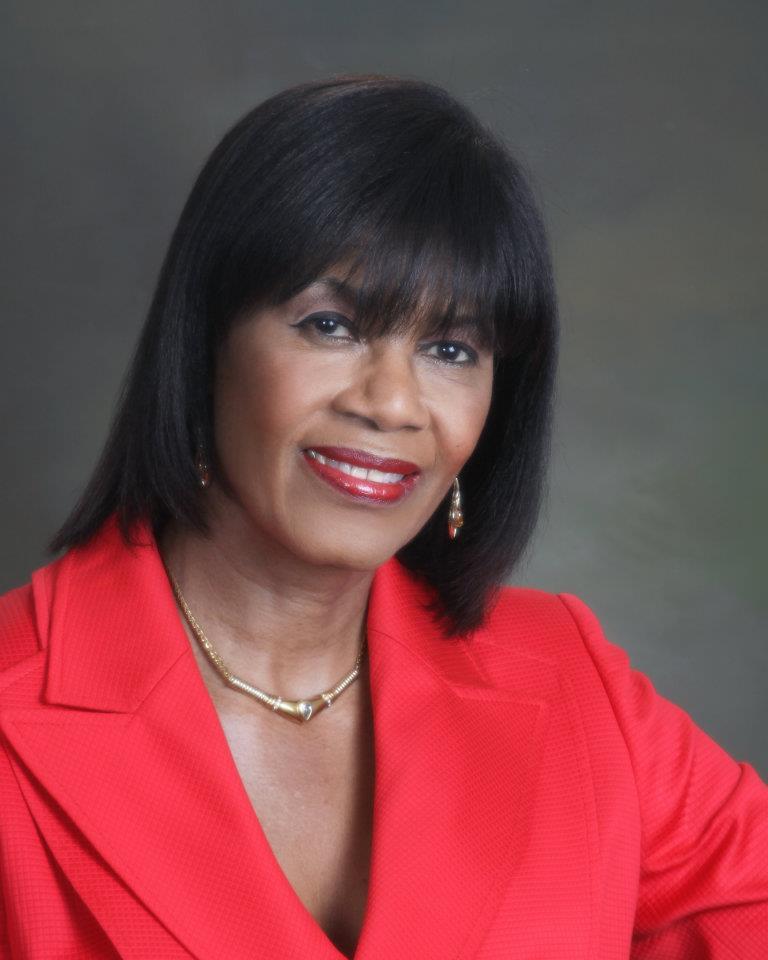
Portia Simpson-Miller: The Woman Who Rose From the Community to the Highest Office in Jamaica
There are women whose rise to power seems almost inevitable when viewed from a distance.
Portia Simpson-Miller’s was not one of those stories.
She did not emerge from a political dynasty. She was not born into the kind of privileged environment that traditionally creates national political leaders. She did not become Prime Minister in her thirties, when youthful ambition is often celebrated as evidence of exceptional promise.
She spent decades building her political career from the ground up.
And when she finally became Jamaica’s first female Prime Minister in 2006, she was 60 years old.
Because Portia Simpson-Miller’s story is not simply the story of the first woman to occupy Jamaica’s highest political office.
It is a story about persistence, working-class representation, community politics, political disappointment, reinvention and the extraordinary possibility of arriving at the summit later in life.
She is a Golden Era Icon because her greatest political achievement came after decades of preparation.
From Wood Hall to national politics
Portia Lucretia Simpson was born on 12 December 1945 in Wood Hall, St Catherine, Jamaica. She grew up in a Jamaica that was still under British colonial rule and came of age during the transformation of the island into an independent nation.
Jamaica became independent in 1962. Simpson-Miller was 16 years old.
She therefore belonged to the generation that watched the country move from colonial rule into self-government and independence and whose political consciousness was shaped by the enormous question of what independence should actually mean for ordinary Jamaicans.
That question would become central to her political identity.
Her public career began at the community level. In 1974, she was elected a councillor for the People’s National Party in the St Andrew area.
Two years later, in 1976, she entered the House of Representatives as the elected Member of Parliament for South West St Andrew.
That constituency would become closely associated with her political identity.
She was not a politician who appeared periodically on national television and disappeared back into the machinery of government. She built her reputation by being present in communities.
She became known simply as “Sister P.”
It conveyed familiarity rather than distance.
She was not trying to project the image of an untouchable stateswoman. Her political persona was rooted in the language of ordinary Jamaican people-the worker, the single mother, the pensioner, the struggling household, the young person trying to find an opportunity.
Decades later, that connection to ordinary Jamaicans would become one of the defining characteristics of her political legacy.
A woman enters a man’s political world
Jamaican politics has historically been dominated by powerful men.
The country’s two major political traditions—the People’s National Party and the Jamaica Labour Party—produced formidable male leaders including Norman Manley, Alexander Bustamante, Michael Manley, Edward Seaga and P. J. Patterson.
Women participated in political organizing, community activism, party work and public administration.
But occupying the very top of the political hierarchy was another matter.
Portia Simpson-Miller spent years working her way through that hierarchy.
She became a Cabinet minister and eventually accumulated approximately 17 years of ministerial experience, holding portfolios including Labour, Social Security and Sport; Tourism, Entertainment and Sport; and Local Government, Community Development and Sport. She also had responsibility at different points for women’s affairs.
This was important preparation. By the time she became Prime Minister, she was not learning government for the first time.
She had already spent years dealing with the machinery of the Jamaican state.
- She understood local government.
- She understood labour.
- She understood social protection.
- She understood tourism.
- She understood sport.
And, perhaps most importantly, she understood the people who depended upon government.
The politics of the worker
If there is one thread running through Simpson-Miller’s political career, it is her attention to people who are easily reduced to statistics in government reports.
- Workers.
- Pensioners.
- Women.
- Children.
- People in poorer communities.
- People trying to build homes.
- People trying to find jobs.
People whose lives are directly affected by the decisions made in ministries far removed from their neighborhoods.
As Minister of Labour and Social Security, Simpson-Miller oversaw the expansion of Jamaica’s Overseas Work Programme and helped strengthen the National Insurance Scheme as a major component of Jamaica’s social protection system.
She was also involved in establishing a Labour Chair within the University of the West Indies’ Department of Government.
These achievements may not have the glamour of a presidential photograph.
But social protection is where government meets ordinary life.
A pension is not an abstract policy.
- It is groceries.
- Medicine.
- Rent.
- Dignity.
A labour programme is not merely a government statistic.
It can mean a Jamaican worker earning money overseas and sending it home to educate children, build a house or support parents.
Simpson-Miller’s politics were therefore deeply connected to the practical question of how government could improve the circumstances of ordinary citizens.
The creation of Portmore
One of the most tangible examples of her influence came through her work in local government.
During her tenure overseeing the Local Government portfolio, the Municipality of Portmore was established in St Catherine.
Today Portmore is one of Jamaica’s largest urban centres.
The significance of that development goes beyond the creation of an administrative municipality.
Portmore represented the transformation of a rapidly growing community into a more formally recognised urban entity with its own civic identity and local governmental structure.
It was precisely the kind of work that characterised Simpson-Miller’s political career.
Not everything had to happen in Kingston.
Government could be brought closer to communities.
And communities could demand recognition.
A woman who understood tourism
Simpson-Miller also had an important role in Jamaican tourism policy.
She was identified by the Jamaican government as a leading architect of the country’s Master Plan for Sustainable Tourism Development.
This is significant because tourism is not simply an industry in Jamaica.
It is one of the country’s most important economic engines.
Hotels, restaurants, transportation, entertainment, agriculture, construction, craft industries and countless small businesses are connected to the tourism economy.
For Jamaica, tourism therefore represents employment and foreign exchange—but it also raises difficult questions about who benefits from the industry and whether local communities participate meaningfully in the wealth it generates.
Simpson-Miller’s involvement in tourism reflected her broader political interest in development that reached beyond the country’s traditional centres of power.
The historic election of 2006
In 2006, Jamaica crossed a political threshold.
After the retirement of P. J. Patterson, Portia Simpson-Miller became leader of the People’s National Party and, in March 2006, Prime Minister of Jamaica.
She became the first woman to hold the office.
It was a historic moment not simply for Jamaica but for the English-speaking Caribbean.
Women had long been central to Caribbean societies: They worked. They raised families. They built businesses.
They taught children. They held communities together. They participated in political movements. But the highest levels of political leadership remained overwhelmingly male.
Then a woman walked into Jamaica’s Office of the Prime Minister.
And she did not arrive as a political newcomer.
She arrived after approximately 30 years of public service.
Her victory was not the sudden discovery of a talented woman.
It was the culmination of a lifetime of political work.
The image of “Sista P”
There was something unusual about Simpson-Miller’s political image.
She did not resemble the stereotypical technocratic politician.
She was warm.
She was expressive.
She spoke in a distinctly Jamaican political language.
She was comfortable with ordinary people.
And she was not afraid to present herself as a Black Jamaican woman from a community-based political tradition.
For some people, this made her deeply relatable.
For others, it made her seem less polished than the conventional political establishment.
That tension followed her throughout her career.
Women in politics are frequently judged not only on whether they can govern but on whether they perform authority in an acceptable way.
A male politician can be loud and be called commanding.
A woman can display the same behaviour and be called aggressive.
A man can be emotionally passionate and be considered charismatic.
A woman can display emotion and be considered unstable.
A man can cultivate a common-man image and be celebrated as authentic.
A woman can do exactly the same thing and be dismissed as unsophisticated.
Simpson-Miller’s political career unfolded within this complicated landscape of expectations.
And she persisted.
Defeat did not end the story
Her first tenure as Prime Minister was short.
The People’s National Party lost the 2007 general election to Bruce Golding’s Jamaica Labour Party.
Simpson-Miller therefore became Leader of the Opposition.
For many politicians, losing the premiership after finally breaking such a historic barrier might have marked the end.
For Simpson-Miller, it became another chapter.
She remained leader of the PNP.
She continued to campaign.
She continued to organise.
And five years later, she returned to the office she had lost.
2012: She came back
On 5 January 2012, Portia Simpson-Miller was sworn in as Prime Minister for the second time.
This second victory is perhaps as important as her first.
The first time, history made her.
The second time, the electorate returned her.
She was no longer simply the woman who had broken the barrier.
She was an experienced national leader seeking another mandate.
And she returned to office at a difficult economic moment.
Jamaica had been struggling with high debt, slow economic growth and fiscal pressures.
Her second administration therefore inherited a country facing hard economic choices.
This required a very different kind of political leadership from the symbolism of becoming the first woman Prime Minister.
Now she had to govern.
Governing through economic difficulty
During Simpson-Miller’s second administration, Jamaica continued implementing major economic reforms, including fiscal consolidation and measures connected with agreements with the International Monetary Fund.
These reforms were not always politically comfortable.
Economic restructuring rarely is.
Reducing government deficits, controlling public-sector wage costs, improving tax collection and reducing debt can create real pain even when the long-term objective is greater economic stability.
By 2015, Jamaica was being recognised internationally for improvements in its macroeconomic performance.
In her 2016 New Year’s address, Simpson-Miller highlighted Jamaica’s reduction in national debt, improved investment climate and strong stock-market performance.
Her government also placed emphasis on housing and land ownership.
In her 2016 budget presentation, Simpson-Miller highlighted National Housing Trust spending and the government’s land-titling programme, including thousands of titles distributed to Jamaicans.
For a woman whose political identity had always been connected to ordinary Jamaicans, these issues were significant.
Home ownership is not simply about property.
For many Jamaican families, land represents security.
It represents inheritance.
It represents the possibility of passing something tangible to children.
It represents a family’s place in the economic future of the country.
Education and the Jamaican child
Education was another major component of her government’s agenda.
Her administration pointed to increased investment in education and improvements in literacy. In her 2016 budget speech, Simpson-Miller cited progress in literacy and education spending as important achievements of the 2012–2016 period.
Again, the deeper significance lies in what education means for a country such as Jamaica.
Education is one of the great equalising forces available to a small country.
A child born without wealth can acquire qualifications.
A child from a rural community can enter a profession.
A daughter of a domestic worker can become a doctor.
A boy from a poor neighbourhood can become an engineer.
Education does not eliminate inequality.
But it can change the trajectory of a family.
Simpson-Miller understood that connection between education and social mobility.
The politics of women
Her position as Jamaica’s first female Prime Minister also inevitably made her a symbol for women’s advancement.
She had spent years working on women’s affairs before reaching the premiership.
Her government continued to emphasise women’s participation in public life, while Simpson-Miller herself became an international member of the Council of Women World Leaders, a network of current and former women presidents and prime ministers.
Her historic achievement therefore extended beyond Jamaica.
A woman from a small Caribbean island had joined the ranks of female heads of government around the world.
She had done so in a political system with a long tradition of powerful male leaders.
And she had done so without abandoning the identity that had brought her there.
She remained “Sister P.”
The 2016 election
Then came another test.
In February 2016, Jamaica held a general election that was extraordinarily close.
The Jamaica Labour Party won 33 seats.
The People’s National Party won 30.
Simpson-Miller conceded defeat.
And this moment deserves recognition because democratic leadership is measured not only by how a politician behaves when winning.
It is measured by what happens when the people say no.
Simpson-Miller accepted the result and urged Jamaicans to unite around the country’s future.
She had become Prime Minister.
She had lost the office.
She had returned.
And she had lost again.
Yet she remained a significant figure in Jamaican public life.
What made Portia different?
There is a temptation to describe political leaders only through their policies.
But politics is also about representation.
People want to see themselves reflected in their leaders.
For many Jamaicans, particularly working-class and lower-income citizens, Simpson-Miller represented something deeply personal.
She looked like them.
She sounded like them.
She spoke about their concerns.
And she had spent decades moving through the same political structures they had watched from outside.
The Jamaican government, in a 2026 tribute marking the renaming of the Ministry of Labour and Social Security building in her honour, described her legacy as one characterised by perseverance, compassion and a close connection with ordinary Jamaicans. It specifically highlighted her understanding of workers, women, young people, elderly citizens and vulnerable communities.
That is a powerful description of political representation.
Not simply speaking for people.
But making people feel that their lives are visible.
The woman behind the historic first
Portia Simpson-Miller’s significance should not be reduced to the sentence:
“She was Jamaica’s first female Prime Minister.”
That is where her story begins, not where it ends.
She was a woman who spent more than four decades in public life.
She entered politics through local government.
She became a Member of Parliament.
She served as a Cabinet minister for years.
She developed policy in labour and social security.
She worked on tourism.
She helped shape local government.
She became leader of one of Jamaica’s major political parties.
She became Prime Minister.
She lost the office.
She returned.
She governed through economic difficulty.
She lost again.
And she remained standing.
That is a political life.
What women can learn from Sister P
There is an especially powerful lesson here for women over 40.
The world often treats women as though their greatest value has an expiration date.
Young women are told they have potential.
Women in their thirties are told they are ambitious.
Women in their forties are expected to balance everything.
Women in their fifties are increasingly pushed toward the language of “reinvention.”
And women in their sixties are too often encouraged to retire from public ambition.
Portia Simpson-Miller’s life challenges that entire progression.
At 60, she became Prime Minister.
At 66, she returned to the office.
She spent decades accumulating knowledge before the world finally placed her at the centre of political power.
Her story says something extraordinarily important:
Your life experience is not evidence that your moment has passed. It may be the very thing that qualifies you for your greatest moment.
The years matter.
The failures matter.
The disappointments matter.
The jobs matter.
The children matter.
The communities matter.
The people you have met matter.
The things you have learned the hard way matter.
All of it can become political capital, professional capital, social capital and wisdom.
A Golden Era Icon
Portia Simpson-Miller’s Golden Era was not a retirement chapter.
It was the culmination of everything that came before.
She entered Jamaica’s highest political office after decades of public service.
She did not have to become a different woman to become Prime Minister.
She did not have to erase her community roots.
She did not have to stop being “Sister P.”
She carried those identities with her into the highest office in the land.
That is perhaps the most important reason she belongs here.
Because Her Golden Era is not about celebrating women simply because they are famous.
It is about recognising women who have entered the chapters of life when society often expects them to become quieter—and instead became more consequential.
Portia Simpson-Miller demonstrated that leadership can be built slowly.
That political careers do not have to peak in youth.
That losing an election does not mean losing one’s purpose.
That a woman can be underestimated and still prevail.
That community work can become national leadership.
And that the woman who spent decades walking through neighbourhoods, meeting ordinary people and listening to their problems can eventually find herself walking into the most powerful political office in her country.
In 2006, Jamaica watched history being made when Portia Simpson-Miller became its first woman Prime Minister.
But perhaps the more important story is what happened before that moment.
She worked. She waited. She learned. She lost. She returned. She served. She persisted.
And when her opportunity finally came, she was ready.
That is the essence of a Golden Era.
Not youth. Not perfection. Not a life without setbacks.
Experience transformed into power.
Portia Simpson-Miller’s story reminds every woman who has ever wondered whether she started too late that sometimes the years you think have delayed you are the very years preparing you.
She did not arrive at the top because life was easy.
She arrived because she kept climbing.
And when she finally reached the summit, she carried an entire community with her.